The first time I cracked the brand-new crown on my tooth, I recall the dentist saying something along the lines of, “No human should be able to exert that much force on their jaw.”
However, the damaged tooth didn’t really come as a surprise to me. The wear on my molars had been pointed out on previous dental visits, so I already knew I grind my teeth and/or clench my jaw when I sleep. I was even fitted for an expensive mouth guard—not covered by insurance—that I never wear.
A few weeks ago, when I was sleeping next to my daughter at my sister’s cottage, I was awoken in the middle of the night by what sounded like nails on a chalkboard. Deliriously, I looked around in the dark and identified where the awful noise was coming from… my little girl’s angelic, sleeping head.

Why couldn’t she have inherited my frugality or my terrible fashion sense?
Nora’s teeth grinding continued the next few nights we shared the same room. But, hey, at least it was only in her sleep. Until it wasn’t.
A couple days after we got home, I heard it. Baby teeth grinding together in broad daylight. Without hesitation, I reacted how I imagine any other mom would. I calmly explained to my daughter that if she didn’t stop grinding her teeth they would all fall out and she would never be able to eat again. Not blueberries, not popcorn, not candy, nothing. She looked half confused and half terrified.
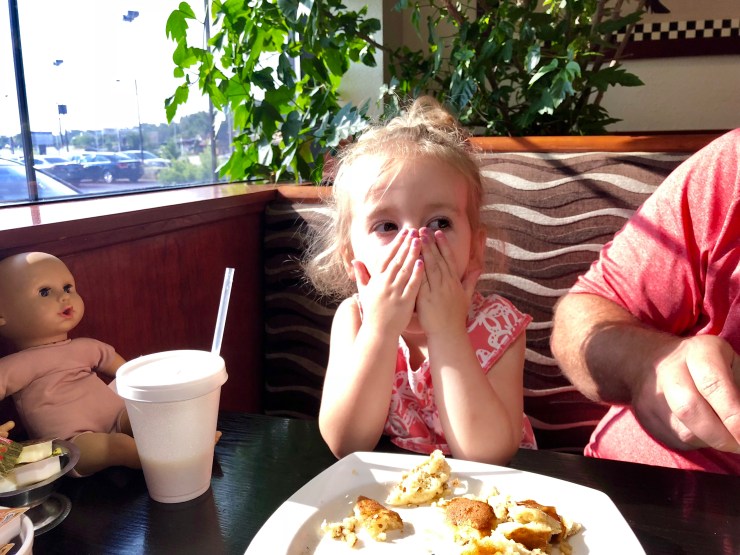
With just a few more foreboding reminders that morning, I haven’t heard her grind her teeth since.
Now, I’m guilty of telling my kid some white lies here and there to explain small matters, such as what may have happened to her cookies from Grandma while she was asleep. But when it comes to real, fear-inducing deception, I try to avoid it at all costs. Unless, of course, it may mean expensive dental bills, a lifetime of tooth problems and enduring that awful, awful sound on a daily basis.
To varying degrees, this type of shockvertising, scare tactic or fear-based marketing, has been a popular strategy in political campaigns for decades. It’s also been used in product advertising and cause marketing campaigns.
In fact, one of the most memorable campaigns that has stuck with me since childhood utilized—in a somewhat odd way, now that I think about it—a fearmongering technique.
The idea is to spread frightening, exaggerated rumors of an impending danger, purposely arousing public fear about an issue. Fear is a strong emotion—in children and adults alike—and it can be used to manipulate people into making emotional rather than reasoned choices. An ideal scenario for marketers.
Of course, fear-based marketing tactics, like fear-based parenting tactics, don’t make sense in all—or even many—situations. In product marketing, it can be effectively used for items that have an impact on health and safety, such as automobiles, household cleaners and prescription medicine.
In my opinion, fear-based parenting tactics are also best used in situations that potentially have an impact on health and safety. Or, in the case of toddler teeth-grinding, occasionally in the event of maddening noise pollution.
 Marketing Like a Mother